
In the last few years, Europe has faced intertwined crises – climate change, rising inequality, and political polarization. The challenge is immense, especially in Central and Eastern Europe (CEE), where long-standing traditions and post-communist histories intermingle with the pressure for a socially just transition. But grassroots organizers have shown that, even when the winds of Realpolitik blow fiercely, bottom-up community organizing can be a beacon – and a movement – for hope, agency, and systemic change.
This Blogpost is based on the ECON publication “Organizing Across Borders: Stories of Community Organizing Campaigns from Czech Republic, Slovakia and Poland”(2025). You can read a full report here.
The ECON-coordinated project, “Organizing Frontline Communities for a Just Transition,” brought together campaigners and organizers from Czechia, Slovakia, and Poland to answer a crucial question: what does it take to build lasting power with the communities most affected by climate crisis and inequality? Rather than parachuting in with ready-made solutions, campaigners worked with local groups to listen, strategize, and act in solidarity, turning shared struggles into collective victories. Below, there are the examples of the real stories of how ECON member organizations made it work in practice.
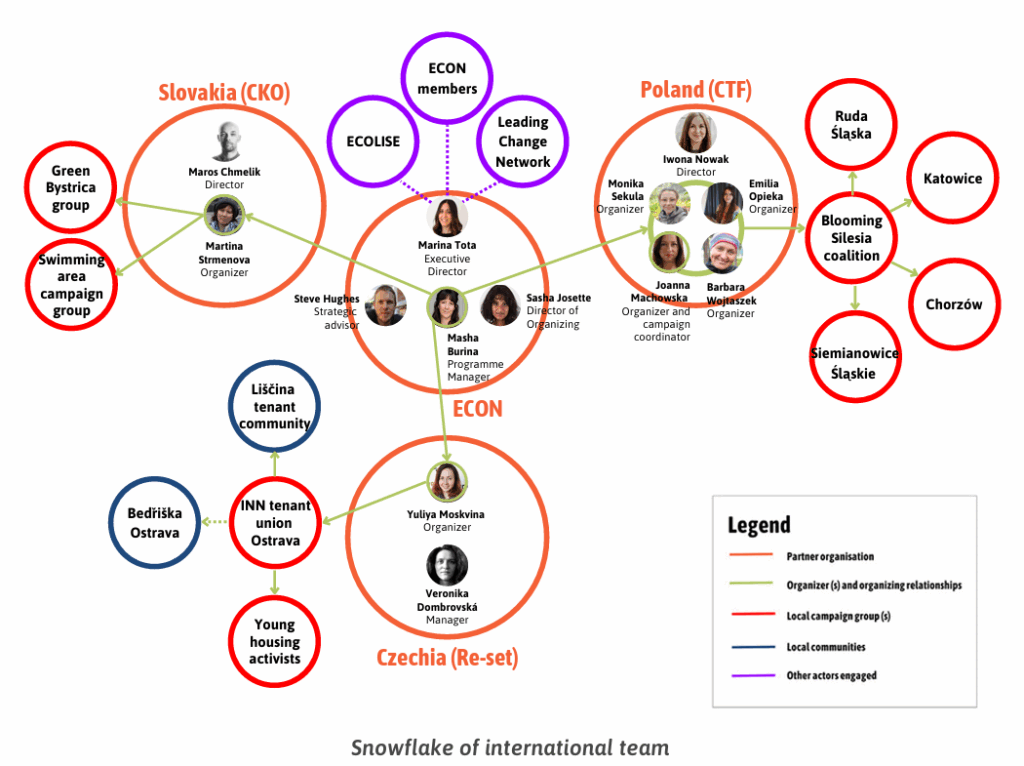
Central strategies included relationship-building through one-on-one conversations and door-to-door outreach, which fostered trust and empowered local residents to articulate their needs and drive change in their neighborhoods. Facilitated group meetings and workshops created opportunities for dialogue, emotional processing, and strategic planning, with an emphasis on inclusive participation and leadership development. Campaigns employed collective tactics such as petitions, protests, open letters, and social media storytelling to apply public pressure and shift narratives, while also forming alliances with civil society groups and experts to expand influence and resources. Participatory methods like power mapping, problem tree analysis, and community mapping were used to analyze local issues, identify key actors, and clarify strategic objectives. Leadership was distributed using models like the snowflake structure, ensuring teams could organize effectively even across different cities and constituencies. International coaching, training sessions, and regular cross-border convenings supported reflection, adaptation, and the sharing of organizing methods, enabling groups to learn from one another and align on common principles for systemic change.
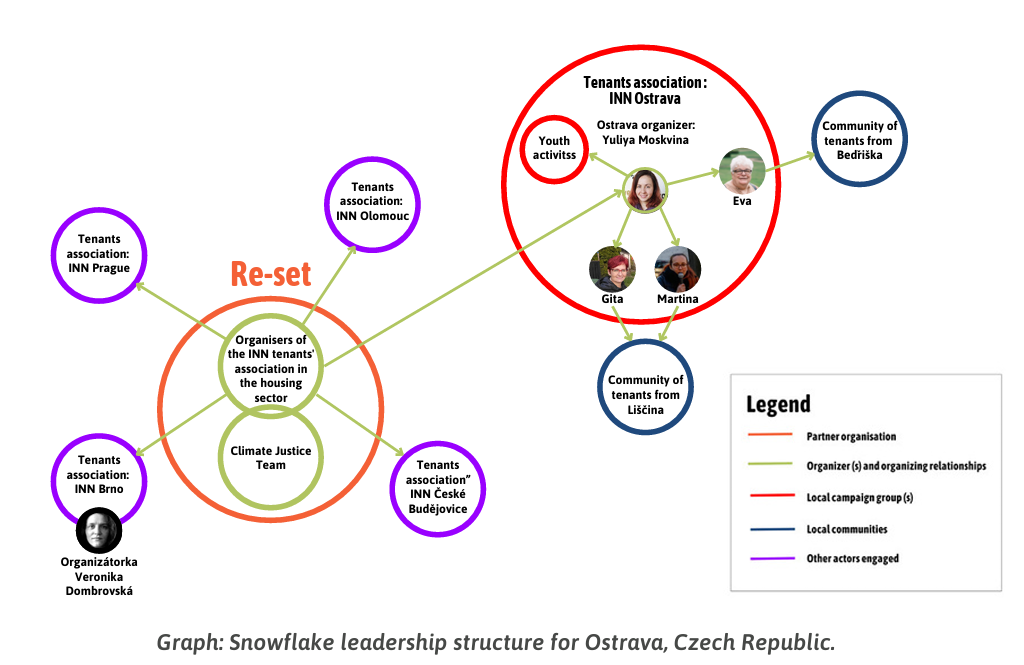
In Ostrava, decades of coal mining left a legacy of environmental damage and economic hardship. The rush of privatization in the 1990s and subsequent corporate ownership of tens of thousands of homes created a housing crisis, with tenants living in precarious situations and unclear agreements. Re-set, a young and dynamic organizing group, focused first on the “just transition” in coal communities, but quickly realized that housing was the most urgent issue for many.
The organizing team built bridges between long-term residents, many of them former coal miners, and newer communities, including Roma tenants facing eviction. Their strategy was relationship-based: one-to-one conversations, workshops, and collaborative campaigns demanding fair housing and tenant rights. Over time, these efforts evolved from representing a single group to forming a city-wide tenants union, united in their demand for dignity and housing security.
The lesson? When organizers start with what matters most to communities, they can build resilient alliances, achieve tangible policy changes, and nurture new leaders from the ground up.
Slovak organizers from the Center for Community Organizing (CKO) carried a rich legacy of fighting extremism, corruption, and discrimination. For the Just Transition project, the focus shifted to green spaces, climate justice, and expanding democratic participation.
Using petitions, local campaigns, and creative public pressure, the newly formed Green Bystrica group brought thousands into active citizenship. They addressed the visible – like ensuring public swimming areas were managed fairly – and the systemic, such as engaging youth and long-standing activists in joint learning.
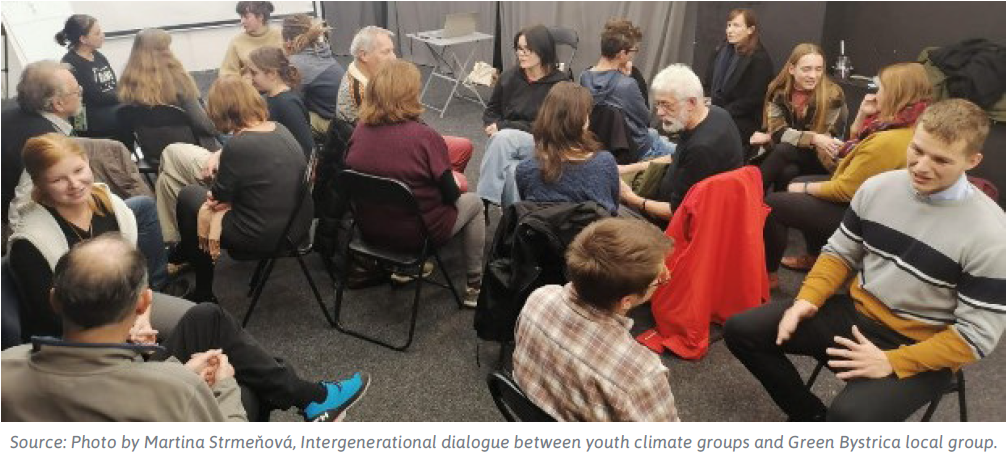
When local government proved unresponsive, organizers pivoted to supporting candidates in municipal elections who shared the vision for more transparent, environmentally conscious leadership. The strategic flexibility paid off: by focusing on winnable, tangible issues and nurturing intergenerational dialogue, campaigners broadened civic engagement and reshaped public discourse around climate and democracy.
Silesia’s coal-mining heritage has shaped its identity, but the transition away from coal created uncertainty and disempowerment among residents. The Common Thing Foundation stepped in with a simple, powerful tactic – listening. Through one-on-one conversations and nature walks, the coalition identified key priorities: green urban spaces, genuine public dialogue, and holding leaders accountable to local voices.
Blooming Silesia quickly grew from four to seven cities, with a diverse coalition representing more than forty civil society organizations. Their campaigning was inventive – marches dressed as plants and animals, music, art, and storytelling – rooted in joy and inclusion rather than confrontation.
This creativity shifted public perceptions, gained media attention, and resulted in concrete commitments from local governments to address the coalition’s demands. The foundation’s focus on nurturing leadership, especially among women, made the coalition resilient as it scaled up.
What sets ECON’s project apart is how it wove local impact into an international tapestry. Through convenings in Ostrava, Katowice, Banská Bystrica, and Bucharest, organizers shared tools like the snowflake model of distributed leadership, power mapping, and participatory strategy development. International coaching and meetings fostered reflection, adaptation, and mutual support – key ingredients for sustainable organizing.
Balancing local autonomy and international coordination was challenging but essential. The most successful collaborations occurred when local groups led their campaigns, bolstered by solidarity and strategic advice from the wider ECON network. Language barriers did arise, reminding the movement that inclusivity goes beyond local boundaries and requires investment in interpretation and translation.
Diversity of context meant that, rather than a single campaign goal, organizers developed six shared principles:
These were tailored to the specific needs and urgencies in each country, but always rooted in the lived realities of those most impacted.
Every story here is a testament to the strength of relationships, the importance of agency, and the transformative potential of real democratic practice. Here are some of the most important lessons and findings:
This project, spanning three countries and dozens of local campaigns, was never just about one election, one issue, or one victory. It was about piloting and nurturing a culture of organizing – a culture grounded in relationships, creativity, and long-term power-building.
Europe’s political and social landscape will continue to change, but the lessons of Ostrava, Banská Bystrica, and Silesia point to a path forward: root campaigns in genuine local voice, build broad coalitions, center those most affected, and keep learning across borders.
As ECON looks to the future, we invite fellow organizers, movement builders, and curious allies to share their stories, join the conversation, and help grow the relationships and strategies needed for an inclusive, democratic, and just Europe.
Want to connect, share your campaign story, or learn more about community organizing across Europe? Contact ECON, and let’s build together.